
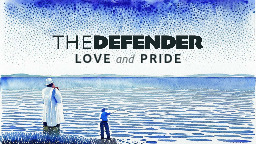
The Defender
↑
argues for
family survival
↓
↑
argues for
physical survival
↓
↑
argues for
tribal survival
↓
Benefits
Passionate, warm, caring
Drawbacks
Possessive, self-absorbed
Benefits
Goals-oriented, organized
Drawbacks
Goals-obsessed, Machiavellian
Emotions work like a jury of the three arguments, which combine in beats. Eristic beats are fast, like a heartbeat.
The Defender leads with love and lands on pride to form the characteristic beat of satisfaction.
The Defender uses love and pride primarily through the satisfaction beat, making for a loyal, cooperative, and steadfast archetype.
Satisfaction is a complicated emotion.
It starts with the lowest energy argument in its internalizing form, love, and then jumps right to the highest energy argument in its externalizing form, pride. It's not a transition that's easy to make, even for the Defender, who has satisfaction as a characteristic emotion.
Satisfaction spans from love to pride, abbreviating every other base emotion.
Satisfaction is famously hard to achieve. What's less well-known is how it breaks down into the other emotions. In a sense, everyone is chasing satisfaction when they try to achieve all emotional arguments in their daily life.
The Defender can easily empathize with those close to them and come to their defense. Duress, attachment, envy— these are all just pieces of satisfaction to the Defender.
Defenders also tend to be accepting of other emotional viewpoints in general, which makes them good deal-makers and negotiators.
These are the beats the Defender is good at.
These are the beats the Defender struggles with.
These are the beats the Defender more rarely uses.
Personal rankings: Your score percentage for each archetype is calculated when you complete the test.





The base emotions are like underlying survival needs.
Hatred fulfills disgust and anger, for example.
Duress fulfills fear, guilt and disgust, leaving love, anger and pride unfulfilled.
Explore how the 9 emotional archetypes position across 15 behavioral dimensions. Switch either axis or select a preset.
PRESETS:
YOU
Attachment/envy/zeal cultures are typically family- or individualism-oriented and hard-working.
Devotion/contempt cultures have strict rules, devoted followers and a disdain for outsiders.
Satisfaction culture, usually for smaller groups, focuses on avoiding fear, guilt, disgust and anger.
The Defender, like the Giver, falls into the self-society-world pattern. This pattern is powerful for connecting with others and for leading organizations.
The Defender has a hard time fitting into either the attachment/envy/zeal or devotion/contempt societal patterns.
The inherent problem with satisfaction is that it doesn't scale. Unlike the other two patterns, satisfaction can't support large groups. It can however support smaller, exclusive groups focused on achieving satisfaction. The Defender would be well-served to seek out such a group.
Some emotional combinations cover multiple arenas independently. For example, feeling love and disgust simultaneously covers both sides of the self argument. When this is combined with zeal, it functions somewhat like satisfaction:
Love, disgust, and zeal combined function similarly to satisfaction, but more viscerally.
In order to fully reach satisfaction, the Defender needs to experience and master all of these underlying base emotions (marked by a dashed outline on eristic diagrams).
Frustration, revelation and satisfaction are the "big" eristic emotions, making the biggest leaps on the emotional spectrum:
The longer the bar, the harder the emotion is to achieve.
The Defender is great at working with the archetypes that embody these emotions, the Hero and the Architect. The key is mastering love and pride, the complementary base emotions for the two:
Intense love and intense pride are natural masteries of the Defender. Avoiding the resulting disconnected anger is harder.
The key to the Defender archetype is helping others and avoiding the self-gratification demands of satisfaction. The balancing act of the self and society arguments ultimately needs to lean towards society—towards pride—the harder argument to master.
Since the coping emotion shares the same arguments (self/world/society) in inverted polarities, it effectively pauses the characteristic emotion, providing relief from overwhelming intensity.
The coping emotion serves as a shadow archetype, characterizing the feeler in periods of acute emotional stress.
When you feel satisfaction you can't feel envy, and vice versa. The Defender can 'turn off' satisfaction using envy to cope with the strong combination of love and pride.
Since satisfaction is particularly hard to achieve, even for the Defender, this can be a really terrible cycle to fall into. Here are some common signs:
Lifestyle inflation: An escalating set of standards can drive the Defender towards lifestyle inflation, where envy drives them towards higher and higher standards of living.
Status obsession: The Defender may come to self-define entirely through their place in the status hierarchy.
Nepotism: The Defender may be prone to giving friends and family high-status positions.
The Defender is naturally good at compassion and diligence which work like love and pride.
The Defender should aim to develop discretion and fairness, which work to moderate love and pride.
The hardest-to-develop virtue for The Defender is honor, corresponding to their blind spot.
Virtues act like the opposite of their emotion—coping made conscious and disciplined. For The Defender, developing honor actively balances their unengaged anger argument.